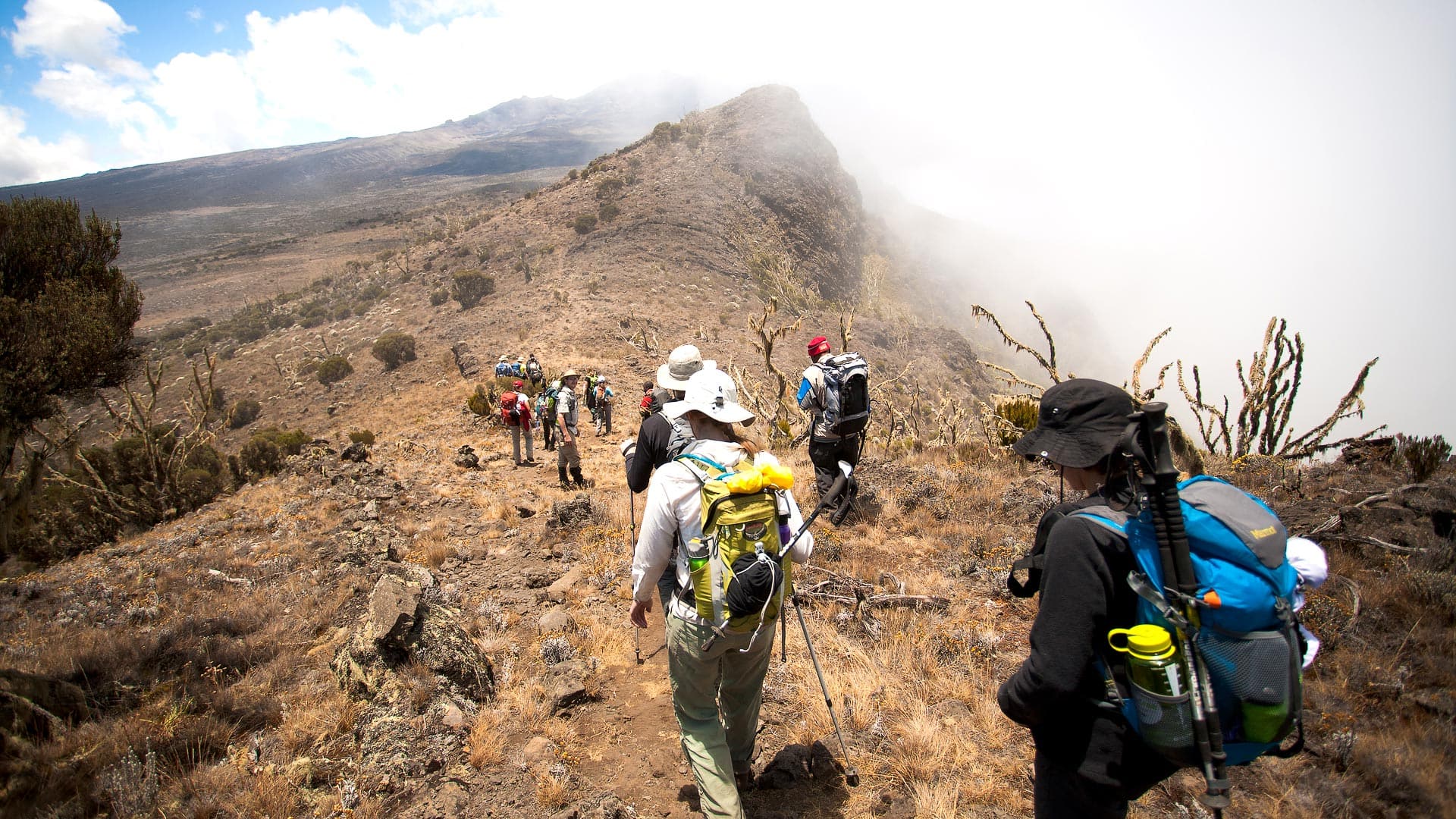
Choosing the right route up Mount Kilimanjaro ranks among the most consequential decisions in your expedition planning. Seven established routes wind up Africa’s highest peak, each offering distinct characteristics, challenges, scenery, and success rates. No single “best” route exists for everyone – the optimal choice depends on your experience level, fitness, available time, budget, scenery preferences, and personal priorities. This comprehensive guide examines every Kilimanjaro route in detail, providing the insights you need to select the path that perfectly matches your goals and capabilities.
Before diving into specific routes, understanding key factors that differentiate them helps frame your decision-making process. Route length, measured in days, directly correlates with acclimatisation time and summit success rates. Longer routes allow your body more time to adapt to altitude, dramatically improving your chances of reaching Uhuru Peak.
Approach direction significantly impacts scenery and weather exposure. Southern routes (Machame, Umbwe, Marangu) receive more rainfall, creating lusher vegetation but potentially muddier conditions. Western routes (Lemosho, Shira) offer spectacular views with moderate rain. Northern routes (Rongai) stay drier but sacrifice some scenic drama.
Accommodation style varies between routes. Only Marangu offers mountain huts; all other routes require camping in tents. Hut accommodation provides shelter from the weather but less privacy and flexibility. Camping offers greater solitude and flexibility, but it also exposes you to the elements.
Traffic levels fluctuate dramatically between routes. Machame and Marangu see heavy crowds during peak season, while Rongai and Northern Circuit remain relatively quiet. Your preference for social interaction versus solitude should inform route choice.
Technical difficulty on Kilimanjaro remains minimal across all routes – no technical climbing skills are required. However, some routes feature steeper sections, rougher terrain, or more challenging summit approaches than others.
Success rates vary by route primarily due to acclimatization time. Longer routes consistently yield higher success percentages. Statistics show seven to eight-day itineraries achieve 85 to 95 per cent success rates, while five to six-day routes often fall below 70 percent.
The Machame Route has become Kilimanjaro’s most popular approach, earning the nickname “Whiskey Route” in contrast to Marangu’s “Coca-Cola Route.” This seven-day trek offers excellent acclimatization, spectacular scenery, and moderate challenge, making it ideal for first-time Kilimanjaro climbers seeking a well-rounded experience.
Machame begins at the Machame Gate on the mountain’s southern side, starting at 1,800 meters. Day one ascends through lush rainforest to Machame Camp at 3,000 meters, a relatively gentle introduction allowing your body to begin altitude adjustment. The rainforest section can be muddy, particularly during or after rainy seasons, but offers opportunities to spot colobus monkeys and diverse birdlife.
Day two climbs steeply through moorland to Shira Camp at 3,840 meters. This section provides your first dramatic mountain views as vegetation thins and volcanic landscape dominates. The elevation gain of 840 meters represents significant challenge, but the trail's beauty distracts from exertion.
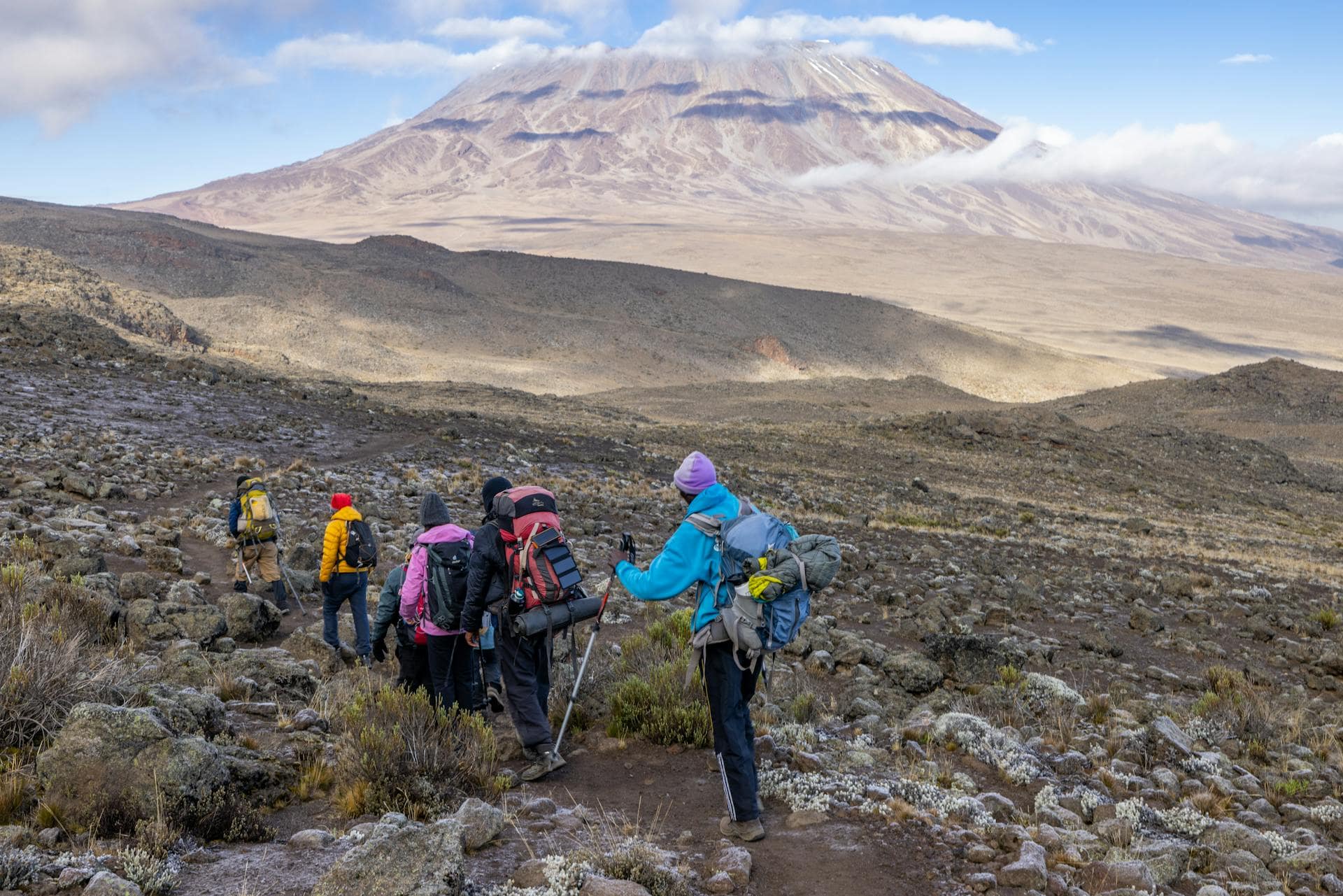
Day three implements crucial “climb high, sleep low” strategy by ascending to Lava Tower at 4,630 meters before descending to Barranco Camp at 3,960 meters. This acclimatization day proves pivotal for summit success. Many climbers feel altitude effects at Lava Tower – headaches, nausea, breathlessness – but these symptoms typically improve upon descending to Barranco.
Day four tackles the famous Barranco Wall, a steep scramble requiring hand and foot placements but no technical climbing. While intimidating in appearance, the wall proves manageable for most climbers and provides thrilling exposure. After conquering the wall, you continue to Karanga Camp at 4,035 meters.
Day five ascends to Barafu Camp at 4,640 meters, your summit night staging point. This short day allows rest and preparation for the demanding summit push. Barafu sits on an exposed ridge with stunning views but harsh winds and cold temperatures.
Summit night (day six) begins around midnight, climbing to Stella Point on the crater rim at 5,739 meters before the final push to Uhuru Peak at 5,895 meters. After summiting, you descend all the way to Mweka Camp at 3,100 meters – a brutally long day covering enormous elevation changes.
Day seven completes the descent through rainforest to Mweka Gate, where you’ll receive your summit certificate and celebrate with your crew.
Machame’s strengths include spectacular scenery diversity, excellent acclimatization profile, reasonable difficulty level, and proven success rates. The route traverses varied terrain, providing constantly changing vistas that maintain interest throughout.
Drawbacks include heavy crowds during peak season, with hundreds of climbers on the trail simultaneously. Campsites can feel congested, and the trail sometimes resembles a highway. The Barranco Wall, while not technically difficult, intimidates some climbers. Additionally, the final descent to Mweka Camp on summit day punishes tired legs over many hours.
Machame suits first-time Kilimanjaro climbers with good fitness, those seeking proven success rates, and climbers who appreciate diverse scenery and don’t mind crowds. If you value acclimatization time and want a well-established route with excellent infrastructure, Machame delivers reliably.
The Lemosho Route represents many experienced climbers’ favorite path, offering superior acclimatization, stunning scenery, and relative solitude. This eight-day trek approaches from Kilimanjaro’s western side, traversing the Shira Plateau before merging with Machame Route at Lava Tower.
Lemosho begins at Londorossi Gate, the highest starting point at 2,250 meters. Day one crosses pristine rainforest to Big Tree Camp (Forest Camp) at 2,780 meters. This section sees far fewer hikers than Machame’s start, offering peaceful forest trekking.
Day two emerges from forest onto the Shira Plateau at Shira 1 Camp (3,500 meters). The Shira Plateau, a collapsed volcanic caldera, provides otherworldly scenery with moorland and volcanic rock formations. Views of Mount Meru and Kilimanjaro's peaks are spectacular.
Day three crosses the plateau to Shira 2 Camp at 3,840 meters. This relatively short day allows acclimatization on the plateau while enjoying incredible scenery. The gradual elevation gain proves ideal for altitude adaptation.

Days four through eight mirror the Machame Route from Lava Tower onwards, including the climb to Lava Tower, descent to Barranco, ascent via Barranco Wall to Karanga, progression to Barafu, summit night, and descent via Mweka.
Lemosho’s extra days at moderate altitude before joining Machame significantly improve acclimatization. Statistics show Lemosho achieves summit success rates of 90 to 95 percent, among the highest on Kilimanjaro. The gradual ascent profile reduces altitude sickness risk.
Scenically, Lemosho excels. The western approach showcases Kilimanjaro’s most beautiful faces, and the Shira Plateau provides unique landscape diversity. Lower traffic early in the trek offers wilderness experience before joining busier sections.
Drawbacks include higher cost due to longer duration and remoter starting point. The extra days require more time off work and additional expense. Once Lemosho merges with Machame, you’ll encounter the same crowds that characterize that route’s upper sections.
Lemosho suits climbers prioritising acclimatisation and scenery over budget, those with flexibility to commit eight days, and anyone seeking higher success probability. If you can afford the extra time and cost, Lemosho’s advantages often justify the investment.
The Marangu Route, nicknamed the “Coca-Cola Route” due to soft drinks available at huts, offers the only non-camping Kilimanjaro option. This five or six-day trek approaches from the southeast, featuring mountain huts with bunks and communal dining halls.
Marangu begins at Marangu Gate (1,860 meters), ascending through rainforest to Mandara Hut at 2,700 meters on day one. The path is wide and well-maintained, earning Marangu a reputation as the “easiest” route – a dangerous misconception that leads to underpreparation.
Day two climbs through moorland to Horombo Hut at 3,720 meters. This hut offers spectacular views of Kibo and Mawenzi peaks. The elevation gain of over 1,000 meters challenges many climbers on their second day. Five-day itineraries proceed to Kibo Hut (4,703 meters) on day three, leaving minimal acclimatization time. Six-day versions include an extra day at Horombo for acclimatization hikes, dramatically improving success rates.
Summit night departs from Kibo Hut around midnight, reaching Gilman’s Point on the crater rim (5,685 meters) before continuing to Uhuru Peak. The ascent on scree is steep and exhausting. After summiting, you descend all the way back to Horombo Hut.
The final day completes descent to Marangu Gate, reversing your ascent route – the only Kilimanjaro route using the same path up and down.
Marangu’s primary advantage is hut accommodation, providing shelter from weather, comfortable bunks, and social dining. This appeals to climbers uncomfortable with camping or visiting during potentially wet seasons.
However, Marangu’s reputation as “easiest” causes problems. The route is physically no easier than others, and short itineraries provide poor acclimatization. Five-day Marangu has among Kilimanjaro’s lowest success rates, often below 60 percent. Even six-day versions trail longer routes in success probability.
Using the same path up and down reduces scenery variety. After several days, the landscape becomes repetitive. Additionally, Marangu sees heavy traffic, and huts can feel crowded with limited privacy.
Marangu suits climbers strongly preferring hut accommodation, those uncomfortable camping, or anyone visiting during rainy seasons when shelter from weather provides significant advantage. However, six-day versions are mandatory for reasonable summit chances.
The Rongai Route approaches Kilimanjaro from the north, near the Kenyan border, offering the driest conditions and most wilderness experience. This six or seven-day trek sees less traffic than southern routes while providing good acclimatization.
Rongai begins at Nalemuru Gate (1,997 meters) on the northern slopes. Day one ascends gradually through farmland and pine forest to Simba Camp at 2,650 meters. The northern side receives less rainfall, creating drier conditions but less lush vegetation.
Day two climbs to Second Cave Camp (3,450 meters), continuing through moorland with views toward Kenya. The trail remains less dramatic than southern routes but offers peaceful trekking. Day three reaches Third Cave Camp (3,936 meters) or Kikelelwa Camp (3,600 meters depending on itinerary variation), with continued gradual ascent promoting acclimatization
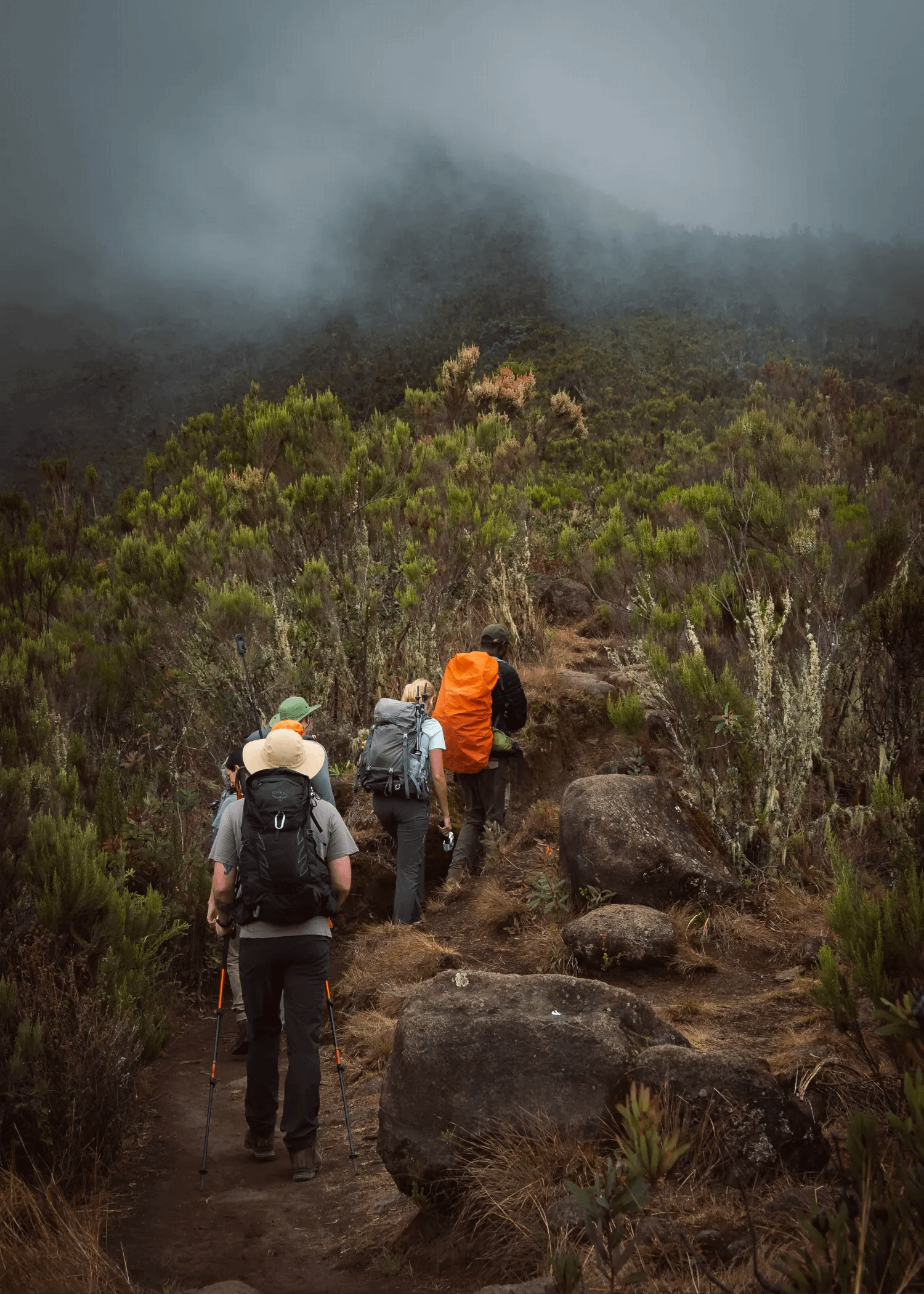
Six-day itineraries proceed to Kibo Hut, while seven-day versions include an extra acclimatization day at Mawenzi Tarn Camp (4,330 meters), positioned below the dramatic Mawenzi Peak. This extra day significantly improves success rates.
Summit night departs from Kibo Hut, following the same route as Marangu to Gilman’s Point and Uhuru Peak. Descent follows the Marangu Route to Horombo Hut and Marangu Gate – meaning you ascend one route and descend another, providing scenery variety.
Rongai’s key advantage is drier conditions year-round. The northern slopes receive significantly less precipitation, making Rongai attractive during shoulder seasons when southern routes face rain. Fewer climbers choose Rongai, offering quieter experience with genuine wilderness feel.
The gradual ascent profile suits climbers preferring steady elevation gain over dramatic ups and downs. However, Rongai lacks the scenic drama of southern and western routes. Views are pleasant but less spectacular than Machame or Lemosho.
Rongai suits climbers seeking solitude, those visiting during rainy seasons, and anyone preferring gradual ascent profiles. Seven-day versions provide good acclimatization and should be chosen over six-day options.
The Northern Circuit represents Kilimanjaro’s newest and longest route, offering eight to nine days of trekking with superior acclimatization and remote scenery. This route approaches via Lemosho before traversing Kilimanjaro’s quieter northern slopes.
Northern Circuit begins identically to Lemosho, crossing western forests to the Shira Plateau over the first three days. From Moir Hut (4,200 meters) on day four, the route diverges from Lemosho, circling around Kilimanjaro’s northern side rather than heading toward Lava Tower.
Days five and six traverse remote northern slopes via Third Cave Camp to School Hut (4,800 meters), the summit staging point. This long approach provides exceptional acclimatization while showcasing Kilimanjaro’s less-visited faces.
Summit night departs from School Hut, reaching the crater rim then Uhuru Peak before descending via Barafu Camp to Mweka Camp. The final day completes descent to Mweka Gate. Northern Circuit's extended duration and circuitous route provide the best acclimatization of any Kilimanjaro path. Summit success rates exceed 95 percent with proper pacing. The route circles nearly three-quarters of the mountain, offering constantly changing perspectives and scenery.
Traffic remains minimal throughout, especially on northern sections. Many days you may encounter no other climbing parties, creating genuine wilderness experience rarely found on popular routes.
Drawbacks include high cost due to extended duration and remote access. The extra days require significant time commitment and expense. Northern Circuit costs 20 to 30 percent more than Machame or Marangu.
Northern Circuit suits climbers prioritizing acclimatization above all else, those seeking solitude and wilderness experience, and anyone with flexibility for extended expedition. If maximum summit probability and unique perspectives justify extra cost and time, Northern Circuit delivers unmatched experience.
The Northern Circuit represents Kilimanjaro’s newest and longest route, offering eight to nine days of trekking with superior acclimatization and remote scenery. This route approaches via Lemosho before traversing Kilimanjaro’s quieter northern slopes.
Northern Circuit begins identically to Lemosho, crossing western forests to the Shira Plateau over the first three days. From Moir Hut (4,200 meters) on day four, the route diverges from Lemosho, circling around Kilimanjaro’s northern side rather than heading toward Lava Tower.
Days five and six traverse remote northern slopes via Third Cave Camp to School Hut (4,800 meters), the summit staging point. This long approach provides exceptional acclimatization while showcasing Kilimanjaro’s less-visited faces.
Summit night departs from School Hut, reaching the crater rim then Uhuru Peak before descending via Barafu Camp to Mweka Camp. The final day completes descent to Mweka Gate. Northern Circuit's extended duration and circuitous route provide the best acclimatization of any Kilimanjaro path. Summit success rates exceed 95 percent with proper pacing. The route circles nearly three-quarters of the mountain, offering constantly changing perspectives and scenery.
The Umbwe Route represents Kilimanjaro’s most direct and steepest path, approaching from the south via a challenging, steep trail. This six or seven-day route is recommended only for very fit, experienced high-altitude trekkers.
Umbwe ascends extremely steep rainforest on day one, gaining over 1,200 meters to Umbwe Camp at 2,850 meters. Day two continues steeply to Barranco Camp at 3,960 meters. This rapid elevation gain provides minimal acclimatization.
From Barranco, Umbwe merges with Machame Route, following the same path via Karanga and Barafu to the summit, then descending via Mweka.
Umbwe’s primary attraction is challenging terrain for experienced mountaineers seeking more demanding approaches. The steep, direct ascent offers less crowded trails and dramatic rainforest scenery.
However, Umbwe has among the lowest success rates on Kilimanjaro, often below 60 percent even for fit climbers. The rapid ascent provides poor acclimatization, and altitude sickness is common. Most experts recommend against Umbwe unless you have extensive high-altitude experience and recent acclimatization.
Umbwe suits only exceptionally fit climbers with proven altitude tolerance and recent high-elevation experience. Even then, longer routes provide better experiences with higher success probability. Umbwe’s reputation attracts ego-driven climbers who often regret the choice.
Selecting your ideal route requires honest assessment of priorities, capabilities, and constraints. Consider the following framework:
If maximizing summit probability is your top priority, choose Lemosho eight-day or Northern Circuit. These longest routes provide optimal acclimatization and highest success rates.
If budget constraints are significant, choose Marangu six-day or Machame seven-day. These popular routes offer competitive pricing while maintaining reasonable success rates.
If you want wilderness solitude, choose Northern Circuit or Rongai. These northern approaches see far less traffic than popular southern routes.
If time is limited, choose Machame seven-day. It provides the best balance of acclimatization, scenery, and time efficiency among proven routes. Avoid five or six-day options as false economy – low success rates waste your investment.
If you strongly prefer hut accommodation, Marangu is your only option. However, choose the six-day version and understand that camping routes generally provide better experiences.
If you’re visiting during rainy seasons, choose Rongai for driest conditions or Marangu for hut shelter.
If this is your first high-altitude trek, avoid Umbwe. Choose Machame, Lemosho, or Rongai with longer duration options.
If you have previous altitude experience and proven tolerance, any route suits you, though longer versions still maximize success.
If scenery is paramount, choose Lemosho or Machame for most dramatic and diverse landscapes.
The truth about Kilimanjaro routes is that most climbers succeed and enjoy experiences on any main route with appropriate duration. The differences between Machame, Lemosho, Rongai, and Northern Circuit prove less significant than choosing adequate duration, selecting quality operators, training properly, and maintaining positive mindset.
Avoid obsessing over finding the “perfect” route. Instead, choose based on your priorities, commit to thorough preparation, select seven to nine-day duration, and trust the process. Thousands of climbers summit successfully via every route annually. With proper planning and effort, you’ll join them regardless of which path you choose.
The mountain itself ultimately matters more than your route up it. Kilimanjaro will challenge, reward, and transform you whether you ascend via Machame’s crowds or Northern Circuit’s solitude. Choose your route wisely, but then focus your energy on preparation, training, and mental readiness. These factors determine success far more than route selection ever could.
No technical climbing skills are required. Kilimanjaro is fundamentally a challenging high-altitude trek rather than a technical mountaineering expedition. You won't need ropes, ice axes, or crampon experience. However, don't underestimate the challenge—you'll need excellent cardiovascular fitness, mental resilience, and the ability to walk six to eight hours daily at high altitude while carrying a daypack. The difficulty comes from altitude, not technical climbing.
Begin training at least four to six months before your climb. Focus on building aerobic endurance through hiking, running, cycling, or swimming, aiming for four to five cardio sessions weekly. Include strength training for legs, core, and back muscles. Long hikes with elevation gain while carrying a 5-8 kilogram weighted backpack prove particularly valuable. High-intensity interval training can also improve your VO2 max, helping your body utilize oxygen more effectively at altitude.
Acute mountain sickness (AMS) is the primary reason climbers fail to reach Uhuru Peak. As you ascend, atmospheric pressure decreases and less oxygen enters your bloodstream. The key to preventing this is choosing longer routes—seven or eight-day itineraries have success rates of 85-95%, while shorter five or six-day routes often have success rates below 70%. The extra acclimatization days dramatically improve your chances of standing atop Africa.
our tour operator choice significantly impacts your experience, success rate, and crew welfare. Prioritize companies with strong ethical practices that pay fair wages, provide proper equipment for porters, and maintain quality gear. Look for operators certified by organizations like the Kilimanjaro Porters Assistance Project (KPAP). Experienced guides with wilderness first aid training, excellent English, and hundreds of summits make an enormous difference. Don't choose based solely on price—rock-bottom costs usually mean corners are cut in porter welfare, food quality, or equipment.
Summit night is the most physically and mentally demanding part of your climb. You'll wake around 11:00 PM and begin trekking around midnight, climbing through darkness toward Uhuru Peak for sunrise. The ascent takes six to eight hours, covering roughly 1,200 meters of elevation gain in temperatures often dropping to minus 20 Celsius. Progress is excruciatingly slow—one step, two breaths, another step—as the thin air contains roughly half the oxygen available at sea level. Mental toughness becomes paramount as you battle nausea, headaches, extreme fatigue, and penetrating cold.
Aim to drink four to five liters of water daily at altitude. Adequate hydration directly impacts acclimatization, helps prevent altitude sickness, reduces headaches, and aids physical performance. Your urine should remain clear or pale yellow—dark urine signals dehydration, which exacerbates altitude problems. This may seem like an excessive amount, but proper hydration is one of the most important factors in your summit success.
The descent presents significant challenges that are often underestimated. More accidents occur during descent than ascent due to fatigue, relaxed concentration, and pounding impact on knees and toes. After summiting, you'll descend to high camp for brief rest before continuing to a lower camp—meaning you might trek 12-16 hours on summit day. Trekking poles prove invaluable for protecting your knees on steep descents through loose volcanic scree. Most routes complete the final descent the day after summit night, returning through moorland and rainforest to the park gate where you'll receive your official summit certificate.

We believe adventure should inspire, not exploit. Every expedition we guide creates meaningful employment for local families, supports community development, and preserves the natural wonders we’re privileged to explore.
* Sign up to receive curated travel ideas, seasonal discounts.
Copyright © 2025 All Rights Reserved.