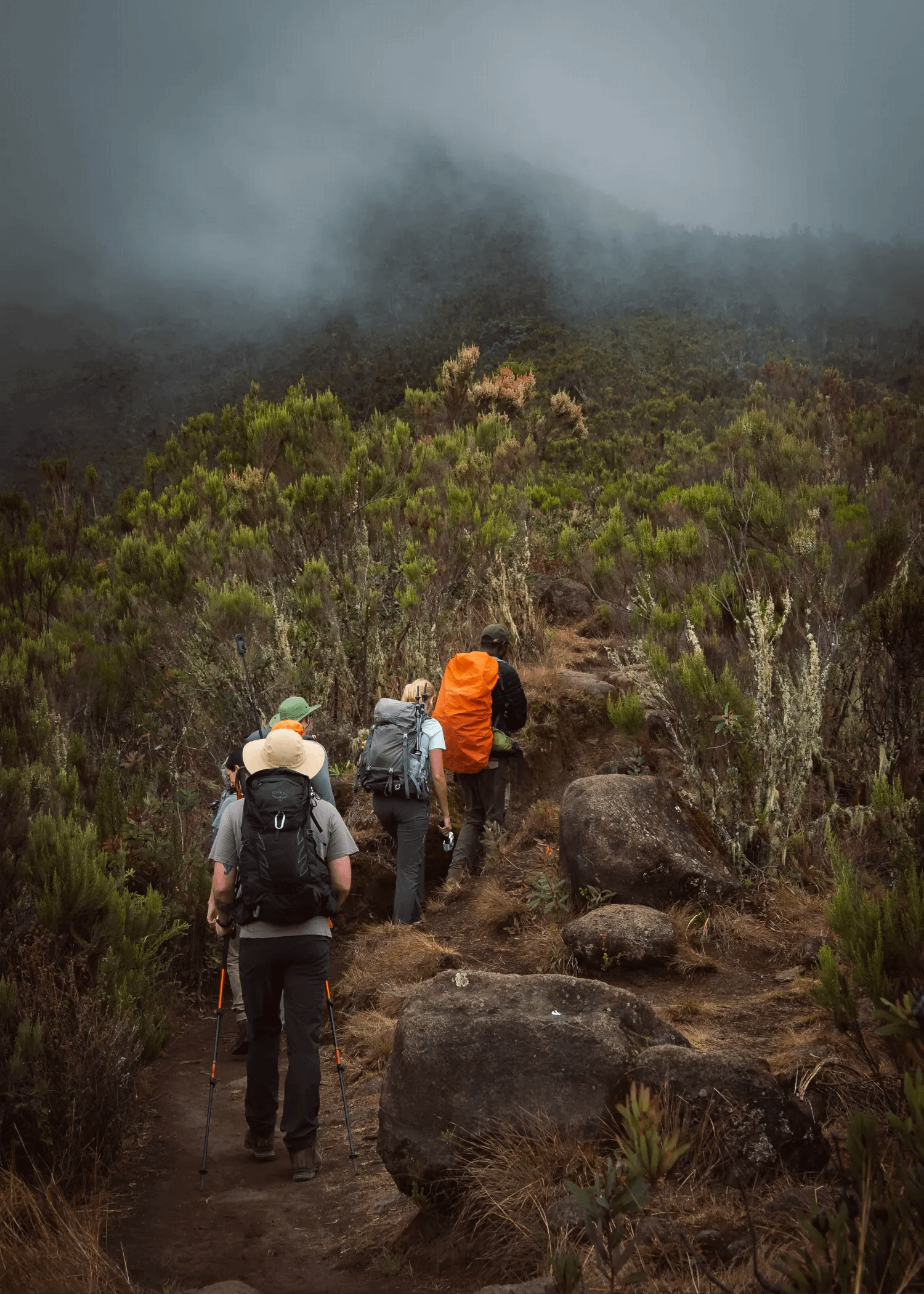
The Lemosho Route stands as Kilimanjaro’s premier climbing experience—a perfect fusion of wilderness beauty, strategic acclimatization, and summit success. Beginning from the mountain’s remote western slopes, this route offers what others cannot: untouched rainforest trails requiring armed ranger protection, the expansive Shira Plateau stretching beneath volcanic peaks, and the crucial altitude advantage that transforms good climbers into successful summiteers.
With an exceptional 85-90% summit success rate, Lemosho outperforms shorter routes through intelligent design. The 9-day itinerary incorporates proven “climb high, sleep low” principles, allowing gradual acclimatization that minimizes altitude sickness. You’ll traverse diverse ecological zones—from equatorial rainforest to arctic alpine desert—while encountering fewer crowds than popular routes like Machame or Marangu. The western approach showcases Kilimanjaro’s most dramatic scenery: sweeping plateau vistas, the imposing Great Barranco Wall, and sunset views of glaciated peaks that photographers dream of capturing.
This isn’t just a climb—it’s an immersive journey through one of Africa’s last great wilderness areas, culminating at 5,895 meters on the Roof of Africa.
Experience Kilimanjaro’s most scenic and successful route. The Lemosho approach winds through pristine rainforest, across the stunning Shira Plateau, and up to Africa’s highest peak. With superior acclimatization profiles and breathtaking wilderness, this route offers adventure seekers the ultimate mountain experience.
Experience Kilimanjaro’s most scenic and successful route. The Lemosho approach winds through pristine rainforest, across the stunning Shira Plateau, and up to Africa’s highest peak. With superior acclimatization profiles and breathtaking wilderness, this route offers adventure seekers the ultimate mountain experience.
Touch down at Kilimanjaro International Airport where your adventure begins. Transfer to Springlands Hotel to rest and prepare for the challenge ahead. Tonight, the mountain awaits.
Embark on a spectacular 5-hour drive to Londorosi Park Gate, traversing landscapes where elephants and buffalo roam. Register with park authorities before entering Kilimanjaro's western reaches—one of the few routes requiring armed ranger accompaniment through the untamed forest. Trek through lush montane rainforest to Mti Mkubwa (Big Tree) Camp, where towering trees form a cathedral canopy overhead. Meals included | Overnight: Mti Mkubwa Camp
Ascend through transitioning vegetation zones as rainforest gives way to moorland. The 5-hour hike reveals Kilimanjaro's volcanic grandeur—the western face of Kibo rising dramatically above the Shira Plateau. Wildflowers and giant heather dominate this otherworldly landscape. Arrive at Shira 1 Camp with time to explore or rest, allowing crucial acclimatization. Meals included | Overnight: Shira 1 Camp
Trek eastward across the high-altitude plateau, a gentle day designed for acclimatization. This relatively short hike allows your body to adjust while soaking in panoramic views of Kibo's western glaciers. The Shira Plateau, one of the world's highest plateaus, showcases volcanic formations sculpted over millennia. Meals included | Overnight: Shira 2 Camp
Today defines your summit success. Climb into an alpine desert landscape, reaching Lava Tower at 4,600m after 5 hours—your highest point yet. Expect breathlessness and possible headaches as altitude challenges you. Then descend 660m to Barranco Camp, employing the critical "climb high, sleep low" strategy. This dramatic descent takes 2 hours through stunning terrain, arriving beneath the imposing Great Barranco Wall as sunset paints the Western Breach gold. Meals included | Overnight: Barranco Camp
Conquer the Great Barranco Wall—an exhilarating scramble requiring hands and feet but no technical climbing. Traverse ridges and valleys through Karanga Camp, then ascend to Barafu (Swahili for "ice"). Pitched on an exposed, narrow ridge buffeted by relentless winds, this stark camp demands careful navigation before darkness falls. The summit looms 1,225m above. Prepare summit gear: check headlamp and camera batteries, pack thermal layers, fill your thermal flask. Rest by 7 PM—tonight, you'll need every moment of sleep. Meals included | Overnight: Barafu Camp
Rise at 11:30 PM. Fuel up with tea and biscuits, then begin your midnight ascent. Navigate northwest through volcanic scree toward Stella Point on the crater rim—6 hours of the most physically and mentally demanding climbing you'll face. Reach Stella Point (5,759m) as dawn breaks, rewarding you with an unforgettable African sunrise illuminating glaciers and clouds below. Push through snow for the final 2-hour climb to Uhuru Peak, the Roof of Africa. Stand at 5,895m, victorious. Savor this pinnacle moment, but don't linger—cold and fatigue strike quickly at this altitude. Descend 3 hours to Barafu, gather your gear, then continue down to Mweka Camp through changing ecosystems as oxygen-rich air revitalizes your body. Meals included | Overnight: Mweka Camp
Descend through lush rainforest to Mweka Gate, typically a muddy 3-hour trek. Sign out with park authorities and receive your certificate: green for reaching Stella Point, gold for conquering Uhuru Peak. Celebrate with your mountain crew—tipping your guides, porters, and cook is customary and deeply appreciated. Return to Springlands Hotel for a hot shower, cold drink, and stories that will last a lifetime. Meals included | Overnight: Springlands Hotel
Enjoy a leisurely breakfast reflecting on your achievement. Transfer to Kilimanjaro International Airport for your departure flight, carrying memories of Africa's highest summit and the extraordinary journey that got you there. Breakfast included
The Lemosho Route offers superior acclimatization with its gradual ascent profile, increasing summit success rates. Its remote western approach traverses pristine wilderness rarely seen by other routes, includes the stunning Shira Plateau, and provides diverse ecosystems from rainforest to arctic conditions—all while maintaining lower traffic than popular routes like Machame or Marangu.
No technical climbing skills are required, but excellent physical fitness is essential. Expect 5-8 hours of trekking daily at high altitude. The summit night demands mental resilience—6 hours climbing through darkness on steep scree. Prior hiking experience and cardiovascular conditioning significantly improve your chances of success.
The Lemosho Route boasts an 85-90% summit success rate, among the highest on Kilimanjaro. The extended itinerary and "climb high, sleep low" approach on Day 5 optimize acclimatization, dramatically reducing altitude sickness risks compared to shorter routes.
Optimal climbing windows are January-March and June-October when weather conditions are most stable. January-March offers clearer skies and fewer crowds, while June-October provides warmer temperatures. Avoid April-May (long rains) and November (short rains) when trails become treacherous and visibility diminishes.
Layer for extreme temperature variation: -20°C at the summit, 30°C in rainforest. Essential items include a 4-season sleeping bag, insulated jacket, moisture-wicking base layers, waterproof shell, warm gloves, thermal hat, quality hiking boots (broken in), trekking poles, headlamp with spare batteries, water purification tablets, and high-altitude snacks. Porters carry most equipment, but keep summit gear accessible.
Yes, absolutely. Purchase comprehensive travel insurance covering high-altitude trekking up to 6,000m and emergency helicopter evacuation. Medical facilities are limited on the mountain, and evacuation from altitude can cost thousands of dollars. Many policies exclude high-altitude activities unless specifically added, so verify coverage before departure.

We believe adventure should inspire, not exploit. Every expedition we guide creates meaningful employment for local families, supports community development, and preserves the natural wonders we’re privileged to explore.
* Sign up to receive curated travel ideas, seasonal discounts.
Copyright © 2025 All Rights Reserved.