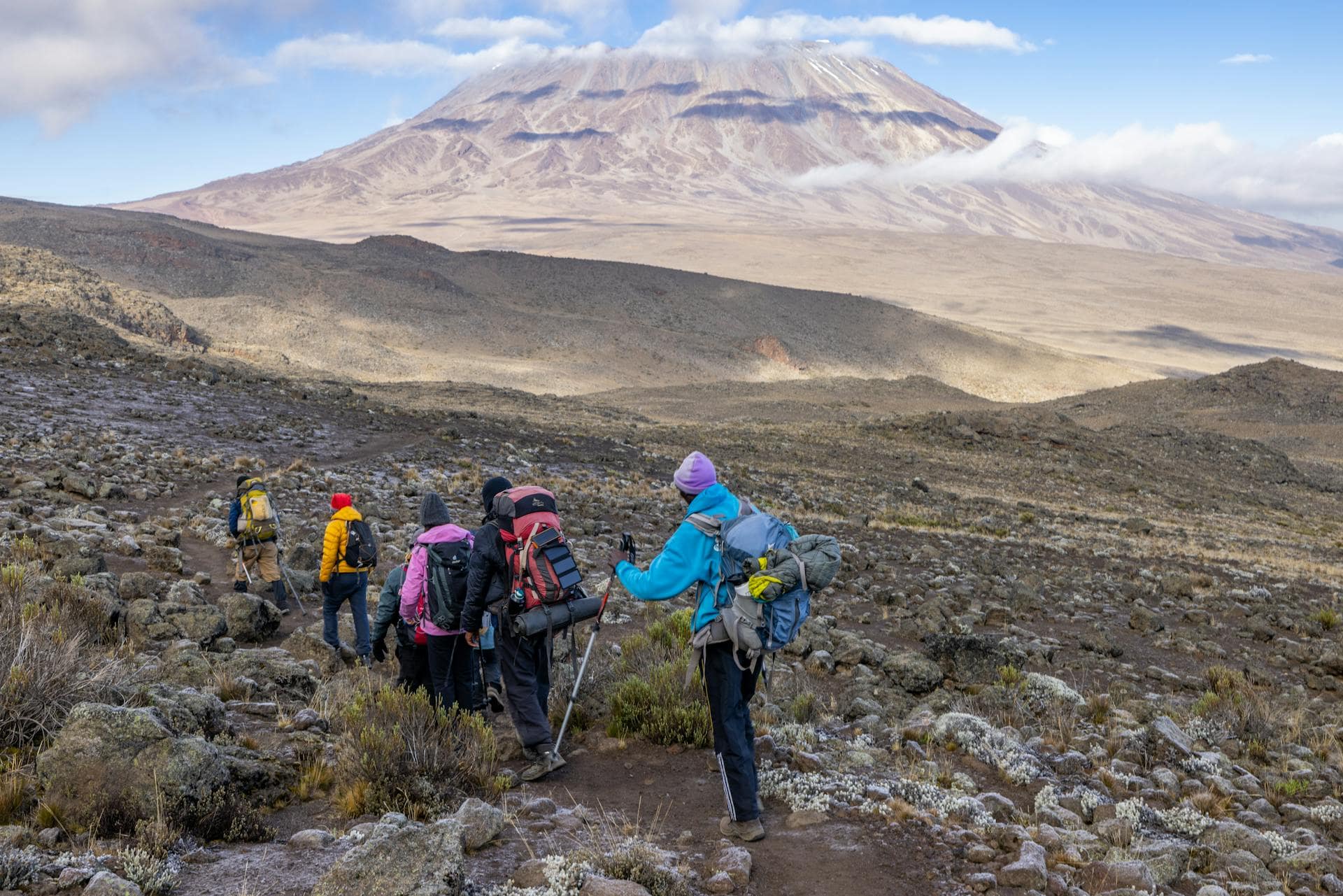
The Rongai Route unveils Kilimanjaro’s untamed northern face—a path less traveled that rewards adventurers with solitude and authentic wilderness immersion. As the only route approaching from Kenya’s border, Rongai traverses the mountain’s drier, sunnier side, offering reliable weather conditions and spectacular vistas across the East African plains.
For climbers seeking tranquility away from crowded trails, Rongai delivers an intimate mountain experience. The gradual northern ascent through pristine forest and moorland provides steady acclimatization, while the unique perspective showcases Mawenzi’s dramatic spires and Kibo’s lesser-seen eastern glaciers. With lower rainfall than southern routes and a well-paced 7-day itinerary incorporating a dedicated acclimatization day, Rongai balances accessibility with adventure. You’ll ascend through Kenya’s wilderness and descend via the historic Marangu route, experiencing two distinct faces of Africa’s highest mountain in a single expedition.
This route suits climbers who value peaceful trails, diverse scenery, and a methodical approach to altitude—perfect for first-time high-altitude trekkers seeking both challenge and safety.
Experience Kilimanjaro from its wildest perspective, ascending the remote northern slopes before standing atop Uhuru Peak at 5,895 meters.
Experience Kilimanjaro’s quietest route from the Kenyan border. Our 7-day Rongai trek offers authentic wilderness, gradual ascent, and stunning views of the mountain’s remote north face. Start your journey today.
Arrive at Kilimanjaro International Airport and transfer to your Arusha hotel. Rest, attend your pre-trek briefing, and prepare for tomorrow's adventure into the northern wilderness.
Drive through verdant villages and sprawling coffee plantations to Nale Muru, a remarkable wooden village on Kilimanjaro's northeast flank. Meet your porter team before entering moist rainforest that quickly transitions to drier vegetation—evidence of the mountain's rain shadow effect. The trail climbs steadily through lightening forest into the heather zone, emerging at Simba Camp (First Cave) with magnificent views stretching across the Kenyan plains below. Hiking: 4-5 hours | Overnight: Simba Camp (~2,830m)
Ascend through expansive moorland distinguished by hardy heather, brilliant wildflowers, and volcanic stone paths. The landscape opens dramatically, revealing Kibo's summit and the glistening eastern glaciers adorning the crater rim. After lunch, diverge from the main trail onto a narrower path winding toward Mawenzi's jagged peaks. Reach Second Cave, nestled in a sheltered valley near Kikelewa Caves where giant senecio plants—prehistoric-looking succulents found only at high altitude—dominate the terrain. Hiking: 3-4 hours | Overnight: Second Cave (~3,450m)
Today prioritizes acclimatization over distance, dramatically improving summit success while minimizing altitude sickness risks. Spend the morning relaxing at camp, hydrating, and absorbing the otherworldly moorland scenery. After lunch, trek across heath toward Mawenzi's imposing spires, gaining modest elevation to Third Cave. This strategic "active rest" day allows your body to adapt while maintaining forward progress. Hiking: 3-4 hours | Overnight: Third Cave (~3,600m)
Climb steeply up grassy slopes, earning spectacular panoramic rewards as the heathland surrenders to stark highland desert. Volcanic boulders scattered across the landscape tell ancient stories of Kilimanjaro's explosive past. Trek for several hours through this primordial terrain before reaching Mawenzi Tarn Hut, spectacularly positioned in a valley cradled by Mawenzi's towering spires. At this elevation, the air thins noticeably—rest well tonight. Hiking: 4-5 hours | Overnight: Mawenzi Tarn Hut (~4,315m)
Cross "The Saddle"—a vast, lunar-like desert connecting Mawenzi and Kibo where vegetation surrenders entirely to volcanic rock and dust. This surreal 6-8 hour traverse delivers you to Kibo Huts at the base of the crater wall. Arrival marks preparation time: organize summit gear, insulate water bottles in thermal flasks to prevent freezing, charge headlamp batteries, and lay out thermal layers. Eat well, hydrate aggressively, then retire early. Tonight you rest; tomorrow you summit. Hiking: 6-8 hours | Overnight: Kibo Huts (~4,700m)
Wake near midnight for tea and biscuits before embarking on Kilimanjaro's ultimate test. Ascend through darkness on loose scree—mentally and physically demanding terrain that challenges every climber. Push toward Gilman's Point on the crater rim, timing your arrival with dawn's first light. Pause briefly as sunrise ignites the glaciers in gold and crimson, then continue along the crater's edge toward Uhuru Peak. The final stretch maintains steady incline, potentially through snow depending on season. Then—victory. Stand at 5,895 meters atop Africa, the Roof of the Continent. Photograph yourself beside the iconic Uhuru Peak sign, embrace this life-defining moment, then begin the remarkably swift descent to Kibo Huts for lunch. Continue down to Horombo Huts for well-earned rest among the heather. Hiking: 10-15 hours total | Overnight: Horombo Huts (~3,720m)
Descend through the lush rainforest to Marangu Gate, completing your trans-mountain journey. Sign out with park authorities and receive your summit certificate: green for Gilman's Point (5,681m), gold for Uhuru Peak (5,895m). Share farewells and tips with your mountain crew before departing Kilimanjaro National Park. Return to Arusha for hot showers, cold drinks, and a celebratory dinner recounting the adventure of a lifetime. Hiking: 5-7 hours | Overnight: Arusha hotel
Enjoy breakfast before transferring to Kilimanjaro International Airport for your departure flight, carrying memories of Tanzania's northern wilderness and the summit that tested your limits.
Rongai approaches from the Kenyan border on Kilimanjaro's remote northern side, requiring longer road access than southern routes. This geographical isolation naturally limits traffic, offering climbers seeking solitude an authentic wilderness experience. While routes like Machame and Marangu see heavy traffic, Rongai maintains peaceful trails where you'll encounter significantly fewer trekkers, creating a more intimate connection with the mountain.
Rongai benefits from the mountain's rain shadow effect. The northern slopes receive considerably less rainfall than southern routes, particularly during shoulder seasons. Expect drier conditions, more sunshine, and better visibility—ideal for photography and comfortable trekking. However, summit night remains bitterly cold regardless of route, with temperatures dropping to -20°C at the crater rim.
The 7-day Rongai itinerary achieves approximately 75-85% summit success rates. The dedicated acclimatization day (Day 4) significantly improves these odds by allowing gradual altitude adjustment. While slightly lower than the 9-day Lemosho route, proper preparation, fitness, and adherence to your guide's pace dramatically increase individual success probability.
Yes, absolutely. Rongai's gradual northern ascent and steady pace make it excellent for first-timers. The route avoids technical sections, requires no climbing experience, and the gentler gradient allows comfortable acclimatization. The inclusion of a dedicated rest day further reduces altitude sickness risks. However, good physical fitness remains essential—train with long hikes carrying a weighted pack before arrival.
Though both routes are considered "easier" approaches, they differ significantly. Rongai ascends the wild northern face through pristine wilderness with camping, while Marangu climbs the busier southern route with hut accommodation. Rongai offers superior scenery, fewer crowds, and the unique experience of crossing The Saddle between Mawenzi and Kibo. You'll also experience both routes' best sections by ascending Rongai and descending Marangu.
Rongai's northern location and rain shadow make it climbable year-round, though January-March and June-October remain optimal. January-March offers the driest conditions, clearest skies, and stunning views across Kenya. June-October provides warmer temperatures and reliable weather. The route's lower rainfall makes it particularly attractive during April-May and November when southern routes become muddy and challenging.

We believe adventure should inspire, not exploit. Every expedition we guide creates meaningful employment for local families, supports community development, and preserves the natural wonders we’re privileged to explore.
* Sign up to receive curated travel ideas, seasonal discounts.
Copyright © 2025 All Rights Reserved.