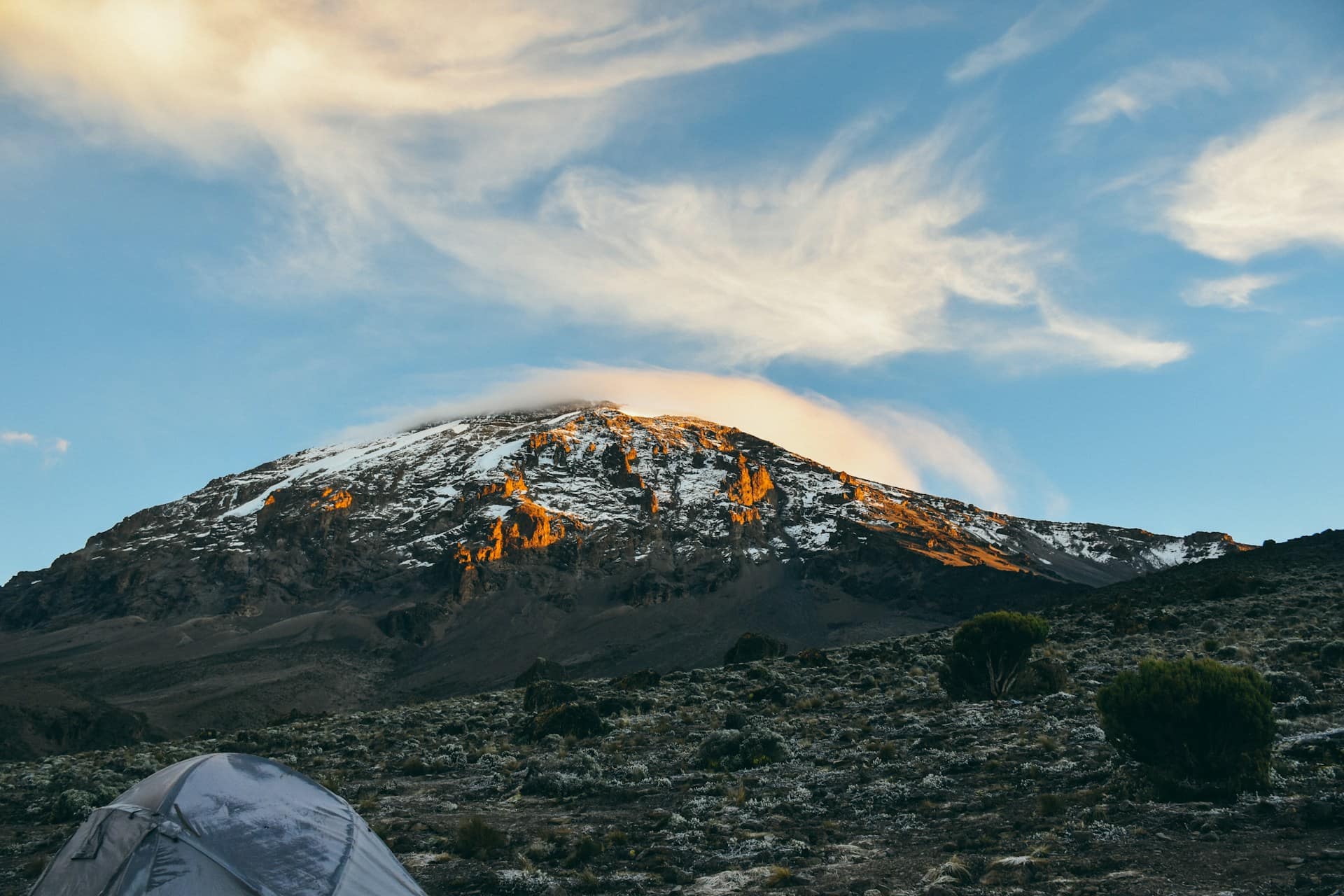
The Northern Circuit stands as Kilimanjaro’s ultimate expedition—the longest, newest, and most successful route circumnavigating the mountain’s remote northern wilderness. This premium experience delivers what no other route can: complete 360-degree perspectives of Africa’s highest peak, genuine solitude on rarely-traveled northern slopes, and unparalleled acclimatization.
With an extraordinary 95%+ summit success rate, the Northern Circuit outperforms every other Kilimanjaro route through intelligent design and extended duration. The 8-day itinerary provides superior altitude adaptation, allowing your body gradual adjustment through varied elevation profiles. You’ll trek where few climbers venture—across Kilimanjaro’s stunning northern face with views stretching into Kenya’s wilderness—while experiencing diverse ecosystems from rainforest to alpine desert.
The route begins via Lemosho’s scenic western approach before diverging north to remote Moir Hut, then circumnavigating the mountain through isolated Buffalo Camp and connecting with Rongai’s northern path. This circuitous journey maximises acclimatisation days while minimizing crowds, creating an intimate wilderness experience. For climbers prioritizing summit success and seeking Kilimanjaro’s most comprehensive adventure, Northern Circuit represents the ultimate choice—premium in every respect.
Experience Kilimanjaro’s newest and longest route. Our 8-day Northern Circuit offers exceptional acclimatization, remote wilderness, and 360° mountain views with industry-leading 95% summit success rates.
Circumnavigate Africa’s highest mountain, experiencing unmatched solitude and scenery en route to Uhuru Peak at 5,895 meters.
Arrive at Kilimanjaro International Airport and transfer to Moshi Attend comprehensive pre-trek briefing, meet your experienced guide team, and prepare for tomorrow’s journey into western wilderness.
Drive approximately 4 hours to Londorossi Gate on Kilimanjaro’s remote western flank. Complete registration before entering pristine montane rainforest—one of few routes requiring armed ranger accompaniment through elephant and buffalo territory. Trek through towering trees draped in moss, crossing streams while ascending gradually to Big Tree Camp (Mti Mkubwa). The forest cathedral creates primordial atmosphere, promising the wilderness immersion ahead.
Hiking: 3-4 hours (6km, +680m) | Overnight: Big Tree Camp
Emerge from rainforest into the heather and moorland zones as vegetation transitions dramatically. The trail climbs steadily, revealing increasingly expansive views of Kibo’s western glaciers rising above. Giant heather gives way to otherworldly moorland dotted with unique high-altitude flora. Reach Shira 1 Camp on the vast Shira Plateau—one of the world’s highest plateaus—where Kilimanjaro’s volcanic grandeur dominates every horizon. Sunset paints the glaciers in gold and crimson.
Hiking: 4-5 hours (8km, +720m) | Overnight: Shira 1 Camp
Diverge north from the standard Lemosho route, heading toward Kilimanjaro’s remote northern wilderness. Trek across the Shira Plateau’s lunar landscapes before ascending gradually toward Moir Hut, nestled in an isolated valley on the northwestern slopes. This camp sees minimal traffic—genuine solitude replaces crowded southern routes. The extended time at altitude provides excellent acclimatization while panoramic views stretch across pristine wilderness toward Kenya. Tonight, stars blaze with intensity found only in remote high-altitude darkness.
Hiking: 5-6 hours (11km, +700m) | Overnight: Moir Hut
Traverse Kilimanjaro’s spectacular northern face—terrain rarely experienced by climbers. Ascend to Lent Hills (4,375m) for breathtaking panoramas before descending to Buffalo Camp. This long day’s varied elevation profile—climbing high then dropping slightly—triggers crucial acclimatization adaptations. The stark northern slopes reveal geological history in exposed volcanic rock and ancient lava flows. Solitude deepens here; you may spend entire days seeing no other climbing parties. Kenya’s wilderness spreads below while Kibo’s summit looms increasingly close above.
Hiking: 5-7 hours (12km, +355m net with undulations) | Overnight: Buffalo Camp
Continue circumnavigating the mountain, experiencing constantly shifting perspectives of Kibo’s massive volcanic cone. The trail maintains moderate altitude while traversing alpine desert where hardy vegetation surrenders to volcanic rock. Connect with the Rongai route approaching from the northeast—you’ve now completed three-quarters of Kilimanjaro’s circumnavigation. Third Cave Camp sits in a sheltered location with views of Mawenzi’s jagged spires. This slightly lower camp allows recovery before tomorrow’s ascent to high camp.
Hiking: 5-6 hours (8km, -150m net with undulations) | Overnight: Third Cave Camp
Ascend steadily toward School Hut, your summit staging camp positioned higher than standard alternatives like Barafu (4,640m). The trail climbs through increasingly sparse terrain where only the hardiest lichens survive. School Hut’s elevated position—just 1,095 meters below Uhuru Peak—provides superior acclimatization but demands respect for altitude. Arrive early afternoon for rest, equipment checks, and early dinner. Organize summit gear meticulously: test headlamps, pack thermal layers, fill insulated water bottles. Your guide briefs summit strategy while anticipation builds. Sleep remains elusive through altitude and excitement, but rest is crucial. Tonight, you summit.
Hiking: 4-5 hours (5km, +930m) | Overnight: School Hut
Wake near midnight. After light refreshments, begin your summit push under star-filled African skies. Climb steadily through darkness on volcanic scree, each step deliberate as thin air challenges every breath. Progress is slow—pole pole (slowly, slowly)—as your body operates on 50% sea-level oxygen. Temperatures plunge to -20°C, windchill biting through every layer. Reach Gilman’s Point (5,681m) on the crater rim as dawn breaks, rewarding your night’s effort with spectacular sunrise illuminating glaciers in ethereal light.
Push onward along the crater rim to Uhuru Peak—Africa’s highest point at 5,895 meters. Stand beside the iconic summit sign, overwhelmed by achievement. The Northern Circuit’s superior acclimatization has delivered you here with exceptional success probability. Savor this pinnacle moment before descending swiftly.
Return to School Hut for brief rest and lunch, then continue the marathon descent to Mweka Camp (3,100m) where oxygen-rich air revitalizes exhausted bodies. After rest, complete the final descent through moorland into lush rainforest to Mweka Gate. Though legs are exhausted, the transformation back to verdant forest feels miraculous. Complete exit registration, receive your gold certificate for conquering Uhuru Peak, and share farewells with your mountain crew before returning to Arusha for hot showers and celebratory dinner recounting eight unforgettable days.
Hiking: 15-18 hours total (28km, +1,095m/-4,255m) | Overnight: Moshi hotel
The 8-day Northern Circuit achieves 95%+ summit success through optimal acclimatization design. The extended duration, circuitous route providing varied elevation profiles, and gradual ascent allow your body maximum time to adapt to altitude. You'll spend more days above 3,500m than any other route, triggering physiological adaptations that dramatically reduce altitude sickness risks and increase summit probability.
Northern Circuit begins via Lemosho's western approach but diverges at Shira 1 Camp to circumnavigate the mountain's remote northern face. This adds 1-2 days and significant distance, creating the longest Kilimanjaro route. The tradeoff delivers exceptional acclimatization, genuine wilderness solitude, and 360-degree mountain perspectives unavailable on Lemosho. Northern Circuit represents the premium choice for climbers prioritizing success and comprehensive experience.
Northern Circuit sees significantly fewer climbers than popular routes like Machame or Marangu. The northern slopes—particularly around Moir Hut and Buffalo Camp—offer genuine solitude where you may spend entire days without encountering other parties. This isolation creates intimate wilderness connection impossible on crowded southern routes. You'll rejoin moderate traffic only after connecting with Rongai route and during final summit push.
For climbers prioritizing summit success and comprehensive mountain experience, absolutely. The additional days dramatically improve acclimatization, virtually guaranteeing summit success for properly prepared climbers. You'll also experience Kilimanjaro's complete circumference, diverse ecosystems, and remote northern wilderness unavailable on shorter routes. The premium pricing reflects extended service, additional park fees, and the route's exceptional value proposition.
While no technical climbing is required, Northern Circuit demands excellent cardiovascular fitness and hiking endurance. You'll trek 5-7 hours daily for seven consecutive days at altitude, with an exhausting 12-16 hour summit day. Prior multi-day trekking experience and high-altitude exposure help significantly. Train with long, steep hikes carrying weighted packs, building both physical stamina and mental resilience for extended mountain immersion.
Optimal windows are January-March (clearest skies, best photography, fewer crowds) and June-October (warmer temperatures, stable weather). The northern route's position makes it slightly more weather-resistant than southern routes during shoulder seasons. However, avoid April-May (long rains) and November (short rains) when trails become challenging and visibility diminishes. January-February offers premium conditions for this premium route.

We believe adventure should inspire, not exploit. Every expedition we guide creates meaningful employment for local families, supports community development, and preserves the natural wonders we’re privileged to explore.
* Sign up to receive curated travel ideas, seasonal discounts.
Copyright © 2025 All Rights Reserved.