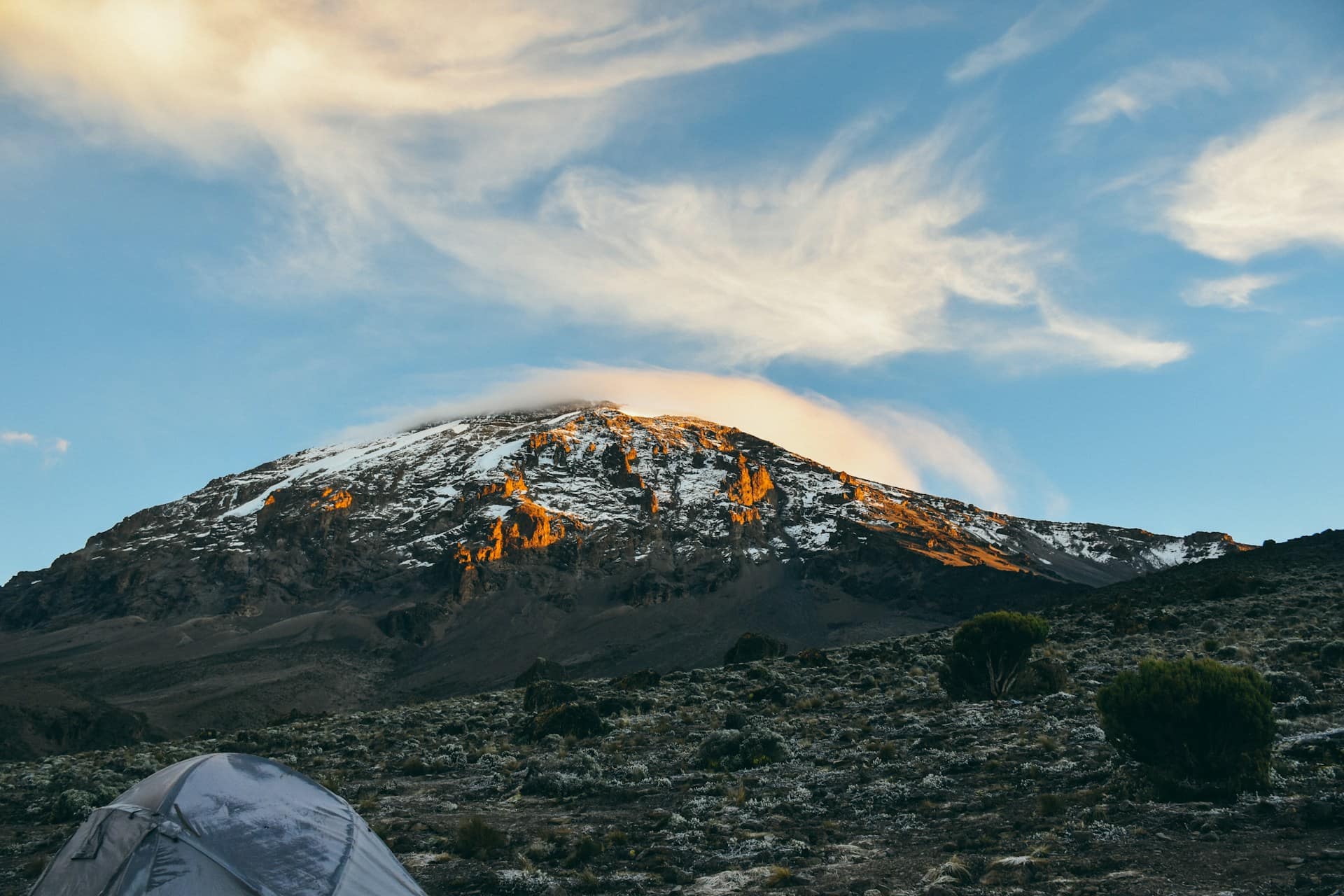
The Machame Route—affectionately nicknamed the “Whiskey Route” for its challenging nature—represents Kilimanjaro’s most popular and scenically diverse climbing experience. This demanding yet rewarding path carves through every ecological zone imaginable, from primordial rainforest to arctic summit, delivering unparalleled beauty at every turn.
Machame strikes the perfect balance between challenge and achievability, boasting a 75-80% summit success rate through superior acclimatization design. The route’s “climb high, sleep low” profile on Day 3 dramatically reduces altitude sickness while the iconic Barranco Wall scramble adds exhilarating variety beyond simple hiking. You’ll traverse the stunning Shira Plateau, ascend through the otherworldly Senecio forest filled with giant groundsels, and camp beneath the imposing Barranco Wall and Heim Glacier—views that define Kilimanjaro’s legendary scenery.
While more crowded than remote routes like Rongai, Machame’s popularity stems from proven success. The varied terrain keeps the journey mentally engaging, the strategic acclimatization maximizes summit chances, and the breathtaking landscapes justify every challenging step. This route demands fitness and determination but rewards those qualities with an unforgettable mountain experience.
Challenge yourself on Kilimanjaro’s most scenic route, ascending through dramatic landscapes to stand atop Africa at 5,895 meters.
Conquer Kilimanjaro via the legendary Whiskey Route. Our 7-day Machame trek offers stunning scenery, excellent acclimatization, and challenging terrain perfect for adventurous climbers seeking the ultimate ascent.
Touch down at Kilimanjaro International Airport and transfer to Moshi. Attend your pre-trek briefing, meet your guide, complete equipment checks, and rest before tomorrow’s rainforest immersion.
Complete registration at Machame Gate before plunging into dense montane rainforest. The trail winds through towering trees draped in moss and ferns, creating primordial atmospheres where filtered light dances through the canopy. Watch for colobus monkeys leaping overhead and listen for diverse birdlife echoing through the forest cathedral. The path—often muddy and root-laced—climbs steadily, steepening as you gain elevation. Arrive at Machame Camp just above treeline where heath begins and your first clear views of Kibo’s summit emerge. Tonight establishes your mountain rhythm: early sleep, anticipation building.
Hiking: 5-7 hours (11km, +1,200m) | Overnight: Machame Camp
Ascend from heath into moorland as vegetation thins and volcanic landscapes dominate. The trail climbs steeply through rocky paths, crossing small streams while Kibo’s massive bulk looms ever larger above. Behind you, forested slopes cascade toward distant plains in breathtaking panoramas. Giant groundsels and lobelias—unique high-altitude plants—dot the otherworldly moorland. Reach the expansive Shira Plateau where many climbers first experience mild altitude symptoms: light headaches, elevated breathing. These normal responses signal your body’s acclimatization beginning. Tonight’s sunset paints Kibo and Mawenzi peaks in gold while stars blaze overhead in the thin, unpolluted air.
Hiking: 4-6 hours (5km, +840m) | Overnight: Shira Camp
Today defines your summit success through strategic “climb high, sleep low” acclimatisation. Trek across Shira Plateau’s lunar landscapes—barren volcanic terrain emphasising the mountain’s fiery origins. Ascend toward Lava Tower, where glaciers and summit views become increasingly dramatic. At 4,630 meters, Lava Tower marks most climbers’ first extreme altitude exposure. Spend 1-2 hours here experiencing high altitude—expect headaches, breathlessness, mild nausea—before descending through the surreal Senecio forest filled with giant groundsels. Relief washes over you during descent to Barranco Camp, spectacularly positioned in an amphitheater beneath the imposing Barranco Wall and Heim Glacier. Most climbers sleep well here, bodies responding positively to the altitude training.
Hiking: 6-8 hours (10km, +790m/-670m) | Overnight: Barranco Camp
Conquer the legendary Barranco Wall—a thrilling scramble requiring hands and feet but no technical climbing skills. While intimidating in appearance, natural handholds make the 1-2 hour ascent manageable, though queues form during peak season at bottleneck sections. The exposure is real, steep drops flanking the trail, but careful footing ensures safety. Beyond the wall, traverse undulating alpine desert across valleys and ridges. Though minimal net elevation gain, the continuous ups and downs provide excellent acclimatization while testing tired legs. Reach compact Karanga Camp perched on a ridge with summit views. This shorter day allows crucial rest and recovery before the final pre-summit push.
Hiking: 4-5 hours (5km, +75m with undulations) | Overnight: Karanga Camp
Climb steadily through increasingly barren alpine desert where vegetation disappears entirely, leaving only volcanic rock and dust. The Mars-like landscape emphasizes your extreme altitude. Barafu—meaning “ice” in Swahili—perches on an exposed, windswept ridge where harsh conditions prevail even midday. The summit looms above, inspiring yet intimidating. Arrive early afternoon for rest, equipment checks, and early dinner before midnight wake-up. Test your headlamp, organize warm layers, fill thermal flasks. Most climbers struggle to sleep through altitude, excitement, and anxiety, though rest remains crucial. Your guide briefs summit strategy: pacing, hydration, communication. Tonight, you’ll attempt the roof of Africa.
Hiking: 4-5 hours (4km, +605m) | Overnight: Barafu Camp
Wake near midnight. After tea and biscuits, begin Kilimanjaro’s ultimate challenge. Climb through darkness for 6-8 hours on steep switchbacks through scree and volcanic sand. Progress is agonizingly slow—one step, two breaths, repeat—as thin air contains just 50% sea-level oxygen. Temperatures plunge to -10°C to -20°C, windchill biting through every layer. Headlamps create a serpentine constellation ascending the mountain. Your body protests, doubt creeps in, but mental fortitude drives you upward toward Stella Point on the crater rim.
Reach Stella Point (5,739m) as dawn breaks, rewarding you with spectacular sunrise illuminating glaciers and distant horizons. Push another 1-2 hours along the crater rim to Uhuru Peak. Stand at 5,895 meters—Africa’s highest point. Photograph yourself beside the iconic summit sign, overwhelmed by relief, joy, and pride.
Descend swiftly to Barafu for lunch, then continue all the way to Mweka Camp. This marathon 12-16 hour day punishes exhausted legs despite euphoria, but oxygen-rich air at 3,100 meters feels intoxicating. Sleep comes easily tonight.
Hiking: 12-16 hours (17km, +1,255m/-2,795m) | Overnight: Mweka Camp
Complete your descent through moorland into lush rainforest. Though exhausted from yesterday’s marathon, the transformation back to verdant forest feels remarkable after days in barren zones. Reach Mweka Gate, complete exit registration, and receive your certificate: green for Stella Point, gold for Uhuru Peak. Distribute tips to your mountain crew before returning to Arusha for hot showers and celebratory dinner.
Hiking: 3-4 hours (10km, -1,460m) | Overnight: Moshi hotel
Enjoy breakfast before transferring to Kilimanjaro International Airport, carrying memories of the Whiskey Route and the summit that tested every limit.
The nickname contrasts with the "easier" Marangu Route (the "Coca-Cola Route"). Machame demands greater fitness and mental toughness with steeper terrain, the Barranco Wall scramble, and camping rather than hut accommodation. It's the adventurer's choice, requiring more grit but delivering superior scenery and achievement satisfaction.
While visually intimidating, the Barranco Wall requires no technical climbing experience. Natural handholds and guide assistance make the 1-2 hour scramble manageable for anyone comfortable using hands and feet on steep terrain. Think challenging hiking rather than rock climbing. The exposure is real but safe with proper care.
The 9-day Machame Route achieves 75-80% summit success rates. The Day 4 acclimatization profile (ascending to 4,630m then descending to 3,960m) significantly improves success by triggering crucial altitude adaptations. Physical fitness, proper pacing, and mental preparation further increase individual odds.
Optimal windows are January-March (dry season with clear skies and fewer crowds) and June-October (warmer temperatures and stable weather). Avoid April-May (long rains) and November (short rains) when trails become muddy, visibility drops, and summit success rates decline. January-February offers the best photographic conditions.
Yes, Machame is Kilimanjaro's most popular route, attracting 40-50% of all climbers. Expect company at campsites and on trails, particularly during peak season. However, the proven acclimatization profile and spectacular scenery justify the popularity. For solitude, consider Rongai or Lemosho routes instead.
While no technical skills are required, Machame demands excellent cardiovascular fitness and hiking experience. Prior multi-day treks at altitude help significantly. The Barranco Wall adds mild scrambling beyond standard hiking. Train with long, steep hikes carrying weighted packs. Mental preparation for summit night's extreme challenge is equally crucial.

We believe adventure should inspire, not exploit. Every expedition we guide creates meaningful employment for local families, supports community development, and preserves the natural wonders we’re privileged to explore.
* Sign up to receive curated travel ideas, seasonal discounts.
Copyright © 2025 All Rights Reserved.